
Indian equity benchmark indices, Sensex and Nifty, tumbled nearly 2 per cent for the fourth consecutive session, driven by elevated crude oil prices, escalating US-Iran tensions, unabated foreign fund outflows, and a depreciating rupee.

The Bankipur assembly bypoll is a high-stakes electoral debut for Jan Suraaj Party founder Prashant Kishor as he challenges the BJP in a constituency that has been a BJP stronghold for nearly two decades.

"With the leverage available, I believe the scheme remains reasonably attractive," said P D Singh, India and South Asia Chief Executive Officer, Standard Chartered Bank, regarding the Foreign Currency Non-Resident (Bank) or FCNR (B) deposits.

Indian benchmark stock indices, Sensex and Nifty, closed nearly 1 per cent lower following the collapse of US-Iran negotiations, which heightened concerns of a prolonged conflict in West Asia and drove crude oil prices sharply higher.

That means making it easier to invest, protecting investors through predictable rules, and avoiding policy reversals after investments have been made, notes Rajeswari Sengupta.

Indian equities on Dalal Street saw volatility as global market trends and fresh tariff concerns linked to Donald Trump impacted investor sentiment. Track Sensex, Nifty50 movement and key market drivers for April 9, 2026.

India's finance ministry anticipates inflation will remain relatively contained in the coming months, supported by a correction in crude oil prices and softening input costs following the cessation of the West Asia conflict, despite earlier spikes in wholesale and retail inflation.

The International Monetary Fund (IMF) has reduced India's growth forecast for FY27 to 6.4 per cent, citing the potential impact of higher energy prices offsetting the country's economic resilience. Despite this, India remains among the fastest-growing major economies.
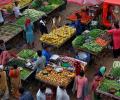
India's retail inflation rose to 4.38 per cent in June, driven primarily by costlier food items, pushing it above the Reserve Bank of India's median target of 4 per cent for the first time under the new series.

This election is different. It is no longer simply about governance or welfare. It is about identity, fear, and who belongs. The BJP has successfully shifted the terms of the debate from what the government has delivered to who the real Bengali is and who is an outsider, points out Ramesh Menon.
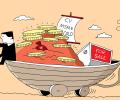
Several non-banking financial companies (NBFCs) are observing an increase in early-stage delinquencies within their micro, small and medium enterprises (MSME) loan portfolios, primarily driven by supply chain disruptions and escalating raw material costs exacerbated by the ongoing conflict in West Asia.

Remittances from West Asia in March rose sharply amid the conflict in the region, with industry insiders estimating inflows to be 20-30 per cent higher than what is usual in a month.

Prime Minister Narendra Modi criticised the Mamata Banerjee government in West Bengal, promising development, accountability, and an end to corruption if the BJP wins the upcoming assembly elections.

Gold and silver are expected to remain volatile with a corrective bias as investors assess the latest flare-up in the US-Iran conflict, movements in crude oil prices, and inflation data, which could reshape expectations for global interest rates, according to analysts.

Be aware of a set of costs that never appears on a college's fee page. They sit as clauses near the end of the state counselling body's prospectus and, in many states, not even there, warns Ashok Hegde, founder, neet2seat.

The Indian banking system's net liquidity surplus has reached a four-year high of Rs 4.57 trillion, driven by maturing government securities, with further maturities expected to push the surplus to around 5 trillion.

The Indian rupee depreciated by 52 paise to settle at 93.35 against the US dollar, driven by failed US-Iran peace talks, surging crude oil prices due to a potential US blockade of Iranian ports, and a global flight to the greenback. This geopolitical uncertainty is also leading to foreign capital withdrawal from domestic equities.
ICICI Bank reported a 9.28 per cent increase in its consolidated net profit to Rs 14,755 crore for the March quarter of FY26, primarily driven by a nearly 90 per cent reduction in provisioning. The bank's executive director, Sandeep Batra, noted strong asset growth but expressed caution regarding the geopolitical situation in West Asia.
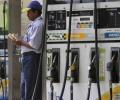
Sri Lankan President Anura Kumara Dissanayake has announced an economic relief package to mitigate the impact of the West Asia conflict, including fuel price reductions and support from India for petrol and diesel supplies.

Tax collection so far has been encouraging, with net direct tax receipts reaching Rs 5.21 trillion by June 17, nearly a 15 per cent increase compared to the same period last year.

On Saturday, it was reported that a drone strike had targeted the Fujairah Port in the UAE, triggering a fire.

Indian benchmark indices Sensex and Nifty climbed in early trade, driven by buying in blue-chip stocks like Reliance Industries and ICICI Bank, alongside a notable cooling in crude oil prices.

'After more than 12 years in power, he has been forced to retreat under public pressure. The education minister's resignation is the biggest political climbdown of his government so far.'
The Confederation of Indian Industry (CII) has proposed a 20-point policy agenda to the finance ministry, including a conflict-linked emergency credit line guarantee scheme and tax rationalisation on energy inputs, to support MSMEs, exporters, and energy-intensive industries affected by the ongoing West Asia war.
Prime Minister Narendra Modi announced six guarantees for West Bengal if the BJP wins the Assembly polls, promising to end the 'reign of fear' and address corruption, while criticising the TMC government's performance.
Moody's Ratings has downgraded India's growth forecast for financial year 2026-27 (FY27) to 6 per cent from 6.8 per cent, attributing the revision to weaker consumption and industrial activity, elevated energy prices, and rising input costs stemming from the West Asia conflict.

'Midcaps and smallcaps are the 'go-to segments' for retail investors.'

Indian stock market indices Sensex and Nifty experienced a decline in early trade due to surging crude oil prices and ongoing geopolitical uncertainty in West Asia. Foreign fund outflows further contributed to the negative sentiment.

Indian stock markets are expected to remain highly sensitive to geopolitical developments, particularly the US-Iran situation, and crude oil prices this week, with analysts also highlighting the influence of the rupee-dollar trend, foreign investor activity, and upcoming inflation data.

Uttar Pradesh Chief Minister Yogi Adityanath has accused the TMC of pursuing appeasement policies in West Bengal, urging voters to support a BJP government for inclusive governance and development.
India's wholesale price inflation surged to 3.88 per cent in March, marking the fifth consecutive monthly increase, primarily driven by a sharp rise in crude petroleum, natural gas, and manufactured items amidst the West Asia crisis.

'After that the burdens of an ageing population will be upon us, and the share of working age population will shrink.'
Railway Minister Ashwini Vaishnaw asserted that the BJP will form the government in West Bengal after the upcoming assembly elections, ending the Trinamool Congress's 15-year rule. He criticised the TMC for vote-bank politics, hindering development, and failing to protect women, while promising unprecedented development under a BJP government.

Bangkok is a fast, 24-hour megapolis, full of joie de vivre and buoyance that you will be instantly smitten, like I was.

Tensions in West Asia have dramatically escalated as Israel launched targeted military operations against Iran, triggering widespread blasts across strategic cities, following earlier Iranian projectile attacks on Israel.
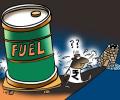
Senior Trinamool Congress leader Abhishek Banerjee has accused the BJP-led central government of planning to increase fuel prices after the West Bengal assembly elections. He challenged the BJP to promise no price hikes for LPG, petrol, and diesel over the next five years.
India's wholesale price inflation (WPI) increased to 9.87 per cent in June, up from 9.68 per cent in May, primarily due to significant price increases in non-food and food products, with food inflation alone rising to 5.49 per cent.

Analysts predict that the ongoing conflict in West Asia, crude oil price fluctuations, and the US Federal Reserve's interest rate decision will significantly influence the Indian equity market this week.

'Buy on dips, buy on dips and sell on rise.'

Former India and Irish cricketer M V Narasimha Rao said the young Vaibhav Sooryavanshi reminds him of the legendary Gary Sobers.
